


Ancient Smokes: Updated Lineups for CS2
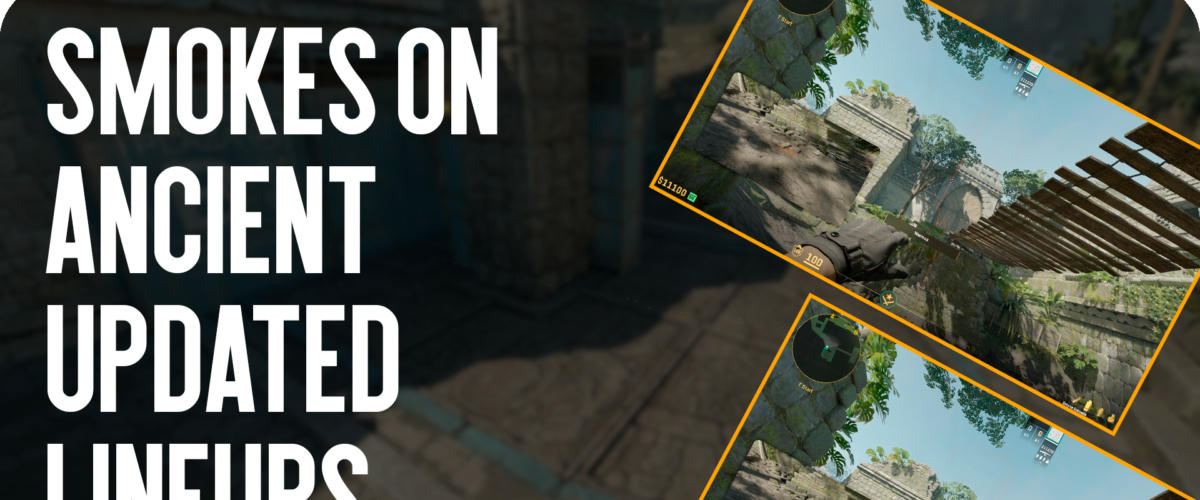
Ancient Smokes: Updated Lineups for CS2
If you play Ancient in Counter-Strike 2 and regularly lose opening duels because of exposed angles, the problem is not always your aim. Ancient has several narrow routes and strong defensive positions where a well-placed smoke can completely change the way a round develops.
Ancient smokes CS2 are especially important because they allow the T side to take space without giving defenders easy long-range fights. Instead of simply throwing grenades randomly, you should know exactly which angle each smoke removes and what your team should do while it is active.
At Csgo-news.com, we have put together a practical guide to the most useful smoke setups for Ancient. The goal is not to memorize dozens of lineups that you will never use. The goal is to learn a compact set of grenades that gives you reliable options for A, B, Mid and post-plant situations.
Quick answer: start with Mid control, one reliable A execute smoke, one B execute smoke and at least one post-plant smoke. CT players should also learn defensive smokes that slow down an execute and buy enough time for a rotation.
Why smokes matter so much on Ancient
Ancient rewards teams that understand space. A defender holding a strong angle can often take several fights if attackers enter without utility.
A smoke can:
- block a powerful defensive position;
- allow players to cross safely;
- isolate a defender from teammates;
- create room for the entry player;
- delay a retake;
- force CTs to spend their own utility.
Good Ancient smokes are therefore not just visual cover. They are tools for controlling the pace of the round.
Players often notice that Ancient becomes much easier once a few basic smokes become automatic. You should not have to stop and think about every lineup during a live round. The lineup should be familiar enough that you can focus on timing, information and enemy positions.
Which Ancient smokes should you learn first?
Do not try to memorize the entire map in one session. For matchmaking and FACEIT, a small group of reliable grenades is much more valuable.
| Smoke | Purpose | Side | Priority |
|---|---|---|---|
| Mid | Take central control | T | Very high |
| A Main | Prepare an A execute | T | Very high |
| Temple | Limit A-site vision | T | High |
| B | Prepare a B execute | T | Very high |
| CT approach | Slow the attack | CT | High |
| Retake smoke | Separate T players | CT | Medium |
Learn the grenades you can realistically use every match before moving to complicated one-off lineups.
Mid smoke: take control of the center
Mid is one of Ancient’s most valuable areas because control of the center gives the T side more options. If CTs keep Mid, the attacking team becomes easier to read.
A well-placed Mid smoke limits vision and gives T players a short window to move forward without immediately taking a rifle duel.
However, do not waste the opportunity. One of the most common mistakes is throwing a perfect smoke and then standing still. The smoke exists to create space. Use that space.
Player feedback: many players find Mid control particularly effective in slower rounds, where the T side wants to force CTs to reveal their positions before committing to a site.
Smokes for an A execute
A site becomes much easier to attack when the main defensive lines are blocked before the entry begins.
A basic sequence can look like this:
- One player throws the main smoke.
- A second player blocks another important defensive angle.
- Utility is used to clear close positions.
- A flash supports the entry.
- The entry player takes space.
- The rest of the team follows quickly.
The key is timing. Your team should not wait passively for the smoke to disappear. The smoke is the window that allows the team to move.
Temple smoke
Temple is an important position to consider when preparing an A execute. A defender holding it can create difficult fights for players entering the site.
Blocking the position reduces the number of angles the entry player has to clear at once.
Player feedback: players often describe Temple as one of the most uncomfortable positions to face during an unassisted A hit, which makes the smoke particularly valuable during coordinated executes.
Smokes for a B execute
B can punish teams that enter without utility. A defender can chain several favorable fights if the attackers arrive one by one.
Before committing, try to understand where the main CT player is positioned. Your smoke should not simply block vision; ideally, it should separate the defender from support.
A practical sequence:
- Gather information through Mid or B Main.
- Throw the first smoke to restrict vision.
- Use a flash before entering.
- The entry player takes the first safe space.
- The second player clears angles outside the smoke.
- Keep at least one smoke available for the post-plant if possible.
Do not spend your entire grenade inventory just to enter the site. The round does not end when the bomb is planted.
Player feedback: coordinated B executes are generally much more effective when smoke, flash and incendiary utility are used together rather than independently.
How to avoid bad smoke throws
A perfect lineup is useless if the grenade lands in the wrong place.
Before using a smoke in a competitive match, check:
- whether you are standing in the correct position;
- whether your crosshair is aligned correctly;
- whether the lineup requires a jumpthrow;
- whether movement is part of the setup;
- whether the map has changed;
- whether another teammate is blocking your position.
Practice each important smoke repeatedly until you can throw it without stopping to search for the reference point.
The objective is consistency, not one lucky throw.
Ancient smokes CS2 for fast rounds
Fast rounds require simplicity.
A useful structure is:
- one player throws the key smoke;
- another immediately prepares a flash;
- the entry player starts moving;
- the rest of the team follows;
- the team decides whether to continue after taking the first piece of space.
A complicated execute can actually make a rush slower. If three players are standing still and preparing grenades, CTs gain time to rotate.
For fast attacks, two or three automatic combinations are better than ten complicated lineups.
Smokes for slow executions
Slow attacks are about information and pressure.
The team can first take Mid, use a smoke, create pressure on one side and wait for the CT reaction. If defenders reveal utility or rotate early, the T side can change direction.
This style is particularly useful against players who spend molotovs and flashes too early.
Player feedback: experienced players often value slow Ancient executes because they create opportunities to make defenders reveal their positions before the real hit begins.
How CTs should use smoke
Smokes are equally important for defense.
As a CT, the objective is often not to completely stop the attack. It is to delay it.
A defensive smoke can:
- slow down a rush;
- give a player time to reposition;
- protect a rotation;
- block post-plant vision;
- create a better retake setup.
Do not waste a smoke simply because you can throw one. Ask what the grenade achieves.
A smoke that allows a CT player to survive and reposition can be much more valuable than a smoke that only looks impressive.
Using smoke after the bomb plant
Once the bomb is planted, a saved smoke can become one of the most valuable pieces of utility.
Instead of throwing it immediately, wait for the CT retake and use the smoke to separate players.
A simple setup:
- The bomb is planted.
- T players establish crossfires.
- One player keeps a smoke.
- CTs begin the retake.
- The smoke isolates one defender.
- T players fight separate duels instead of one coordinated group.
This turns a defensive grenade into a tool for controlling time and space.
Recent Ancient changes and why old lineups need testing
Ancient continues to receive technical adjustments. In 2026, Valve updated clipping on Ancient to prevent certain boost locations. That matters for players who rely on older grenade videos or reference points.
Valve also fixed an issue where Ancient map guides could fail to load in the nighttime version of the map.
The lesson is simple: do not assume an old lineup is permanently correct. If a grenade suddenly lands differently, check the current version of the map before changing your technique.
How to learn Ancient smokes quickly
Use a three-step system.
Step one: basic utility.
Learn:
- one Mid smoke;
- one A smoke;
- one B smoke;
- one post-plant smoke.
Step two: combinations.
Add a flash, molotov, HE grenade or secondary smoke to each situation.
Step three: adaptation.
Learn how to change the execute depending on where the CT players are positioned.
That final step is what separates someone who memorizes lineups from someone who actually understands utility.
Common smoke mistakes
Even the best Ancient smokes will not help if they are used incorrectly.
Common problems include:
- throwing without a purpose;
- using every smoke at once;
- ignoring timing;
- throwing too early;
- failing to take the space created;
- using everything before the post-plant;
- repeating the same execute every round.
Predictability is especially dangerous. Once CTs recognize your setup, they can prepare HE grenades, incendiaries or aggressive pushes.
Where to practice
Use a dedicated practice session instead of trying to learn lineups during a real match.
Practice four situations:
- Fast A execute.
- Fast B execute.
- Mid control.
- Post-plant defense.
Spend several minutes on each. Then repeat the same situations with limited utility.
Reviewing your own demos is also useful. If a smoke never creates an advantage, the problem may not be your lineup. You may simply be using the wrong grenade for the situation.
FAQ
Which Ancient smokes should beginners learn?
Start with Mid, one A smoke, one B smoke and one post-plant smoke. This compact set covers a large part of standard executes.
How many smokes are needed for an A execute?
Usually two or three, depending on the strategy and CT positions. There is no universal number.
Do I need to learn jumpthrow lineups?
Learn them when a specific lineup requires one. But first make sure you understand why the grenade is being thrown.
Why did my old smoke stop working?
Map geometry can change. Valve continues to update Ancient, including changes affecting clipping and movement possibilities.
Can I use the same smoke every round?
You can, but predictable utility becomes easier to counter. Mix your executes and timings.
Where can I find official CS2 updates?
The official source is Counter-Strike 2. You can also find skin-related content and trading information through Forcedrop.vip.
Conclusion
Strong Ancient utility is not about collecting as many lineups as possible. A good smoke changes the conditions of the round: it removes a dangerous angle, creates space, separates defenders or buys valuable seconds. Start with four or five essential grenades and practice them until they become automatic. Then build combinations around flashes, incendiaries and second smokes. Most importantly, connect every grenade to a team action. If the smoke does not create space, deny information or improve the timing of your execute, it probably does not belong in your standard setup. Keep your lineups updated after map changes, and use your demos to understand whether the utility actually produces an advantage. With the right approach, Ancient becomes much easier to read and execute.
👉 Want to learn more? Read here



[…] Winning on Anubis is not about finding one perfect position. It is about understanding how positions connect. Mid creates space, Water provides unexpected routes, Connector links important areas, while Heaven and Pillar give CTs strong defensive options. On T side, do not turn every round into a direct rush: gather information, force the defense to reveal its structure and only then choose the site. On CT side, prevent the enemy from taking the center for free and keep changing your angles after contact. This approach turns simple callout knowledge into a practical Anubis guide that helps you win rounds. Spend several practice sessions on Mid, Water, Heaven, Connector, Gate and Pillar, learn when to hold a position and when to fall back, and the map will become much easier to read. 👉 Want to know more? Read here […]