Advanced guide: how to peek and strafe correctly in the current meta
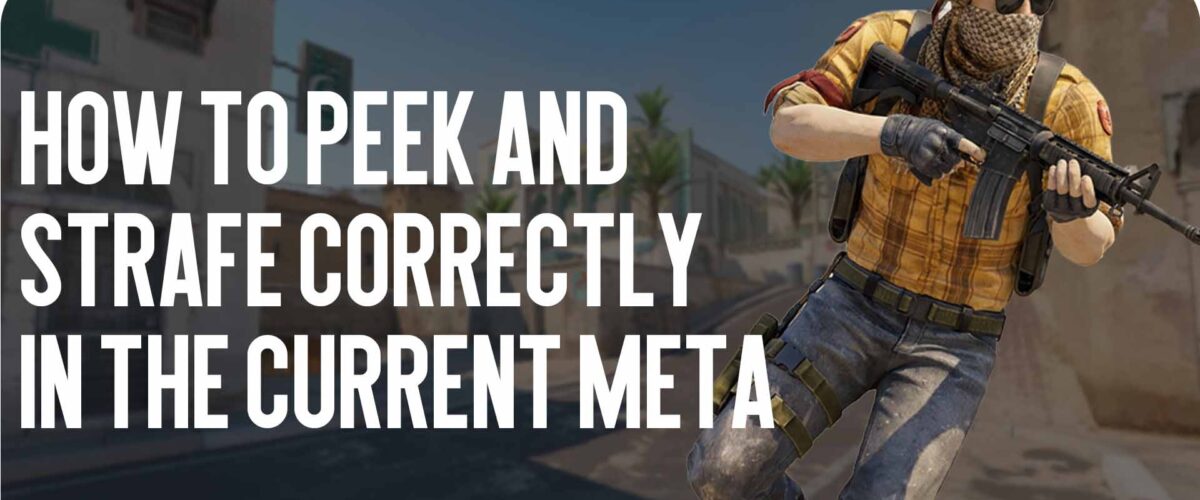
Advanced guide: how to peek and strafe correctly in the current meta
The sub-tick in CS2 is a revolutionary server architecture that forever changed how we feel shooting, movement, and hit registration. Greetings to all esports players and matchmaking enthusiasts on the official CSGO-NEWS blog! The transition from the familiar 64/128 tickrate to the new system became a real challenge even for the most experienced veterans of the shooter. Many players found that their old habits, developed over years, stopped working: opponents seem to fly out from around the corner at the speed of a sports car, and bullets go into the void despite a seemingly perfect counter-strafe. Today we will analyze the technical side of the issue in detail and learn how to adapt our mechanical skills to the current Counter-Strike 2 meta.
How did the new architecture change action registration?
To understand how to win duels, you need to realize the foundation of the new system. In the CS:GO era, the server processed information in discrete packets — ticks (64 or 128 times per second). If you pulled the trigger between these updates, the shot was registered only in the next tick.
Now, the server knows the exact microsecond when you clicked the mouse button or pressed a movement key. Actions are no longer tied to a strict tick grid. Your on-screen animation might synchronize with the next frame, but the action itself (the shot or the model stopping) is counted by the server at the exact moment the click was made. This radically changes the approach to timings and micro-control.
Peeker’s Advantage in the new reality
The main topic of discussion on esports forums is the unprecedented advantage of the attacking player. Because of how the sub-tick works in CS2, a player who aggressively steps out from a corner (peeks) gets a colossal head start.
The server instantly registers their movement and shot. By the time the data packet reaches the defending player (the holder) and renders the attacker’s model on their monitor, the attacker might have already pulled the trigger. Visually, this looks like the famous “Ferrari peek” — the enemy flies out from behind the wall and kills you in the same split second, leaving no time to react.
How to use this in your game:
- Forget about passively holding standard angles. If you stand statically in an obvious position, an aggressive peeker with good aim will obliterate you.
- Peek first. In the current meta, aggression is rewarded. If you know there is an enemy around the corner — swing on them confidently and widely (Wide swing).
- Use off-angles. If you need to play defensively, choose non-standard positions (off-angles) where the opponent will have to flick their crosshair after coming out of cover. This compensates for their timing advantage.
Perfect counter-strafe: why do old habits fail?
Many professionals note that the sub-tick in CS2 absolutely does not forgive the slightest mistakes in counter-strafe timings. In the previous version of the game, due to tickrate rounding, you could press LMB a tiny fraction of a second before the model completely stopped (when pressing the opposite movement key), and the bullet would fly right on target.
Now, the server records your shot at the exact millisecond of the click. If in that millisecond your model still had even minimal speed (you didn’t fully press the opposite direction key), the shot will be considered a moving shot, and the bullet will fly with massive inaccuracy.
Rules for a perfect strafe today:
- Synchronization is everything. You must shoot strictly after or simultaneously with pressing the counter-strafe key (for example, release ‘A’, press ‘D’, and click the mouse in the exact same second).
- Training “clean” inputs. If you previously got used to “gliding” over the keys, now you need to press them sharply and deliberately.
Jiggle Peeks and gathering information
Short peeks from around a corner “on the shoulder” (when you show only a part of your hitbox to bait a sniper’s shot) have also undergone changes. Due to the new system of registering hits on moving targets, sticking out and safely retreating behind a wall has become harder.
If you do a jiggle peek, make it as short as possible. Your task is not even to see the enemy, but to gather information by the sound of their miss or by noticing a pixel of their model. If you swing too wide, thanks to the sub-tick, it will be easier for the sniper to register a hit on your shoulder before you even hide behind cover on your monitor.
Conclusion and parting words from CSGO-NEWS
Drawing the line, it’s important to accept one fact: the architecture of the game has changed forever, and resisting it is pointless. Ultimately, the sub-tick in CS2 is a logical step in the engine’s evolution, making the game more responsive and accurate at the server level, even if our brains need time to adjust to the new visual and mechanical patterns.
Abandon overly passive play, practice aggressive wide swings, bring the synchronization of your mouse and keyboard to perfect automatism on deathmatch servers, and don’t be afraid to dictate your own rules in duels. Stay with the CSGO-NEWS blog, read our analytics, improve your understanding of micro-moments, and you will definitely become that very player whose peeks the entire enemy team will fear!