Forgotten Classics: Why Containers from the Early Game Era Continue to Break Value Records?
Forgotten Classics: Why Containers from the Early Game Era Continue to Break Value Records?
Old CS:GO cases are a true phenomenon in the world of virtual economics and an object of adoration for a huge number of collectors. Greetings to all seekers of rare items, esports history enthusiasts, and our devoted readers on the official CSGO-NEWS blog! With the release of the update and the global transition of Counter-Strike 2 to the newest Source 2 engine, the audience’s attention has once again focused on the very first skin collections. You would think that developers are constantly releasing new, incredibly detailed, and bright finishes with 3D elements that should overshadow the simple textures from a decade ago. However, in practice, the complete opposite is happening: containers released in 2013 or 2014 are only becoming more desirable. Today, we will analyze in detail the mechanics of item drops, the nostalgia factor, and the reasons why classics continue to set unattainable value records.

Rarity Mechanics: How Does the Drop System Work?
The main reason why vintage containers possess such incredible appeal lies in the very architecture of the item drop system from the developers at Valve. To understand this mechanism, you need to divide all existing containers into several categories.
When developers release a new collection, it enters the Active Drop Pool. This means that the vast majority of players around the world receive precisely these containers after leveling up their profile. Naturally, their quantity on the market grows rapidly. But time passes, fresh updates are released, and once-new sets move to the Rare Drop Pool. The probability of getting such an item after a match becomes microscopic.
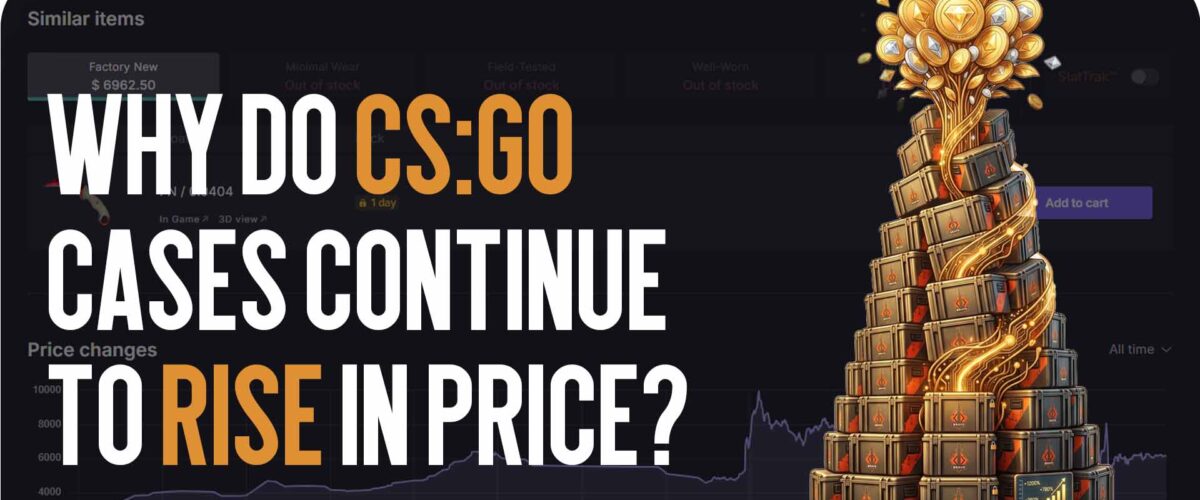
Every day, thousands of containers are opened worldwide, while new ones practically stop appearing. It is this irreversible process of reducing the number of items in users’ inventories that makes old CS:GO cases such a unique asset. Their quantity is physically limited, and with every lock opened, there are fewer of them.
Historical Value and the First Knives
The second most important factor is the contents. The very first collections contain the foundation of the entire shooter’s cosmetic system. Inside these boxes lurk the original finishes for melee weapons that cannot be obtained from modern sets.
We are talking about legendary patterns: Slaughter, Fade, Crimson Web, and, of course, Case Hardened. For any collector or professional esports player, obtaining a classic Karambit or Bayonet with an original finish is a matter of prestige. In the new version of the game, thanks to the revamped lighting and reflection system, old metallic textures and gradients have taken on completely new colors, looking many times more impressive. This has provoked a new wave of massive interest in the origins of the cosmetic economy.
Legends Inside: The Fire Serpent and Lightning Strike
When examining old CS:GO cases, it’s impossible not to mention the specific iconic items that drive people to search for these rare boxes. Unlike modern finishes, where Steam Workshop artists use the most complex 3D modeling software, skins at the dawn of the game were created differently. Many of them look strict, realistic, and therefore even more appealing.
-
Operation Bravo Case. This is the true Holy Grail, inside which lies the iconic AK-47 | Fire Serpent. The image of a Native American deity on a background of standard worn metal of the assault rifle has become a status symbol. Opening this case today is touching the pure history of the shooter.
-
The very first CS:GO Weapon Case 1. This is where the famous AWP | Lightning Strike is hidden. In the Source 2 era, the pixelated lightning bolt on a purple background began to sparkle in the sun, turning the sniper rifle into an absolute masterpiece of minimalism.
-
eSports 2013 Case. A series of containers, part of the proceeds from key sales for which went to fund the first major tournaments. This is a literal monument to the birth of the esports scene as we know it today.
The Influence of Media Space and Streamers
The media space factor should also not be underestimated. Popular content creators, YouTubers, and streamers regularly organize large-scale openings of vintage containers live. For viewers, this is an incredibly emotional spectacle: watching the roulette slowly spin past the rarest items, of which there aren’t many left in the world.
Such broadcasts fuel the audience’s interest. Ordinary players begin to take an interest in the game’s history, study drop probabilities, and often seek to get a piece of the past for their own inventory, thereby maintaining an incredibly high level of demand for the classics.
Conclusions from Our Editorial Team
The virtual items market does not stand still; it constantly evolves and adapts to the new realities of the game engine. However, respect for the origins remains unchanged. By studying the history of esports cosmetics or acquiring old CS:GO cases for your personal collection, you are touching an era when everything was just beginning.
These items continue to break records solely because they are not just textures, but genuine digital artifacts, testifying to the great development path of the most popular competitive game in the world. The CSGO-NEWS editorial team advises you to take good care of rare items in your inventories. Play for fun, take beautiful screenshots of your rare finds, enjoy the updated graphics, and be sure to stay with our blog to be the first to learn the most in-depth analytical materials and fresh news!