Nuke CS2 Map Balance: Features and Game Strategy
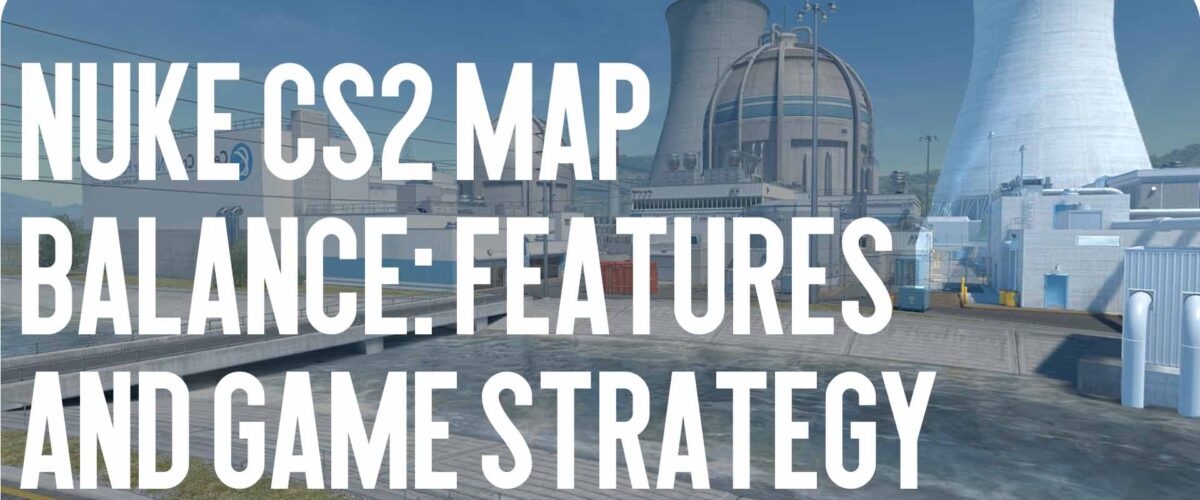
Nuke CS2 Map Balance: Features and Game Strategy
The balance of the Nuke CS2 map has long been a subject of discussion among players and analysts on the competitive scene. This map is known for its complex structure, two levels, and a large number of rotation options.
Nuke requires not only accurate shooting but also a deep understanding of positions, timings, and team coordination. A mistake in positioning can cost a team the round, so knowing the map’s features becomes a key factor for success in Counter-Strike.
The CSGO-NEWS editorial team has prepared a detailed analysis to explain how the balance of the Nuke CS2 map works and what elements make it unique among other maps.

Why Nuke is Considered a Difficult Map
The main feature of Nuke is its vertical structure. Unlike most maps, it has two full levels: the upper bombsite A and the lower bombsite B.
Because of this, players constantly have to account for the possibility of quick rotations through ventilation, ramp, or secret.
This structure greatly influences the balance of the Nuke CS2 map, as teams can change the direction of their attack almost instantly.
Additionally, the large number of narrow passages makes the map highly sensitive to grenade control.
Side Balance on the Map
Historically, Nuke has been considered a map where the defense has an advantage. This is due to several factors:
-
Short rotation distances for the defense
-
Large number of hiding spots
-
Ability to quickly help teammates at the other site
In CS2, the situation has become slightly more balanced thanks to changes in smoke grenades and the updated engine graphics.
Nevertheless, the balance of the Nuke CS2 map still requires the attacking side to prepare each round with maximum precision.
Key Zones of the Map
To understand how the balance works on Nuke, it’s necessary to understand the main gameplay zones.
A Site
The upper bombsite is the most open part of the map. There are many angles and positions for defense here.
Main positions:
-
Hut
-
Heaven
-
Squeaky
-
Rafters
Defense often plays aggressively on the upper level because they have good positions for crossfire.
That’s exactly why attacking A requires proper use of flashes and smokes.
B Site
The lower bombsite is located under the main part of the map and is often the target for slow rounds.
Main positions here:
-
Ramp
-
Vent control
-
Control of the door to B
-
Position behind boxes
The lower bombsite is significantly harder to assault without preparation, which also affects the balance of the Nuke CS2 map.
Secret and Outside
One of the most important zones of the map is Outside. Control of this part of the map provides access to secret and the lower bombsite.
Attackers often use smoke grenades to block the vision of defending snipers.
After this, the team can safely go down to the lower level and begin the attack on B site.
Attack Strategy
The attacking side on Nuke must act very disciplined.
The following strategies are most often used:
-
Fast push onto A through Hut
-
Slow control of Outside
-
Dropping through ventilation
-
Pressure on ramp
Each of these strategies requires good coordination and proper use of utility.
Without this, overcoming the balance of the Nuke CS2 map becomes extremely difficult.
Defense Strategy
Defense on Nuke is built around controlling key positions and making quick rotations.
A typical setup includes:
-
Two players on A site
-
One player on ramp
-
One player controlling Outside
-
One player helping on B
This distribution allows for quick reactions to attacks and support for teammates.
With proper communication, the team can effectively use the advantages provided by the balance of the Nuke CS2 map.
The Role of Grenades on the Map
Utility plays a huge role on Nuke.
Especially important are:
-
Smoke grenades for Outside
-
Flashes for pushing onto A
-
Molotovs for clearing positions
Without proper use of grenades, the attacking side often faces serious difficulties.
That’s why teams pay great attention to round preparation specifically on this map.
Common Player Mistakes
Many players experience difficulties on Nuke due to typical mistakes.
These include:
-
Lack of control over Outside
-
Rotating too early
-
Attacking without utility
-
Poor team communication
These mistakes can quickly disrupt the structure of the game and lead to losing the round.
Conclusion
The balance of the Nuke CS2 map makes it one of the most strategically rich maps in the game. The vertical architecture, complex rotations, and large number of positions create a unique gameplay experience.
Players who understand the balance of the Nuke CS2 map gain a serious advantage. Knowledge of key zones, proper work with grenades, and team coordination allow for effective play both as attackers and defenders.
Vertigo CS2 Map: Key Positions and Game Strategy are already in our article! [Read…]